Panel-ready appliances have become a popular choice for homeowners who want a clean, modern, and intentionally designed kitchen. Instead of showcasing stainless steel or shiny metallic finishes, these appliances sit behind custom cabinet panels—allowing them to blend seamlessly into the room. The result is a kitchen that feels quieter, more refined, and intentional.
But there’s an important detail many people overlook: panel-ready appliances introduce design and planning considerations that extend beyond the appliance itself. Even premium appliances can fall short if the cabinetry isn’t engineered to fully acount for their requirements.
This article explains the relationship between panel-ready appliances and cabinetry, the common challenges that come with these appliances, and how thoughtfully designed cabinetry ensures your kitchen performs and looks as intended.
What Are Panel-Ready Appliances?
Many appliances come in standard finishes such as stainless steel, white, and black. Panel-ready appliances, on the other hand, are designed to accept a custom cabinet panel of your choosing. This allows you to have your refrigerator, dishwasher, or other appliance match the rest of your kitchen. The idea is simple: make the appliance disappear. You will get a kitchen that looks continuous, intentional, and highly tailored. This is especially appealing in open-concept homes where appliances are constantly visible from nearby living spaces.
Why Do Panel-ready Appliances Appeal to Homeowners?
The appeal of panel-ready appliances goes beyond aesthetics—though the seamless look is often the biggest draw. Homeowners choose them because they offer a level of customization and visual harmony that regular appliances simply can’t achieve.
Standard appliances arrive with a fixed finish and set appearance. Even in well-designed kitchens, they always remain visibly distinct from the cabinetry around them. They stand out, which can interrupt the flow of cabinetry and draw attention away from the surrounding design.
Panel-ready appliances, on the other hand, are built to integrate. They accept custom fronts that match your cabinetry, allowing them to blend into the background instead of competing with it. Rather than reading as individual objects, appliances become part of a larger, unified design. This difference is what creates the calm, uncluttered look many homeowners are after.
Homeowners gravitate toward panel-ready appliances because they offer:
A cohesive, built-in appearance that makes the kitchen feel more tailored and intentional.
Full customizability, from the wood species and finish to hardware and panel styling.
Higher perceived value, since integrated kitchens are associated with premium design and craftsmanship.
Hidden Challenges OF Panel-ready Appliances
Panel-ready appliances promise a flawless, built-in look—but achieving that perfection is far from simple. Achieving that seamless, custom look requires precision, foresight, and a deep understanding of both design and engineering. It needs a level of expertise that separates polished results from compromised installations.
Precision and Alignment Requirements
Panel-ready appliances are sought after for their ability to seamlessly blend in with the rest of your kitchen cabinetry. They need to sit perfectly flush and integrate with the surrounding cabinetry. This requires extra attention to detail when building the panels and during the installation. Even a few millimeters off can lead to gaps, rubbing doors, or noticeable misalignment—details that immediately disrupt the seamless look.
Heat, Moisture, and Movement
While this applies to built-in appliances in general, it’s important enough to be mentioned here. Appliances create a challenging environment for the cabinetry they’re integrated with. Refrigerators, dishwashers, and warming drawers generate constant heat, moisture, and movement. All of these can compromise cabinetry materials if they’re not chosen wisely.
Consequences of Poor Ventilation
While the panels make appliances appear fully built-in, the machines behind them still generate heat and require ventilation to function properly. Integrated refrigerators often release heat from the front or sides. Restricted airflows trap heat and can cause compressors to work harder, therefore shortening your appliance’s lifespan. The heat can also warp cabinetry, weaken adhesives, and crack glass.
Brand-specific Requirements
Finally, every appliance brand has specific installation requirements. Some of these include spacing requirements, clearance needs, maximum panel weights, and ventilation needs. This is especially important if you have appliances from different brands in a single space. The reveal tolerances on your Thermador refrigerator column might be different from that of your Sub-zero undercounter wine fridge, for example. Overlooking these details can affect appliance performance or risk voiding the manufacturer’s warranty.
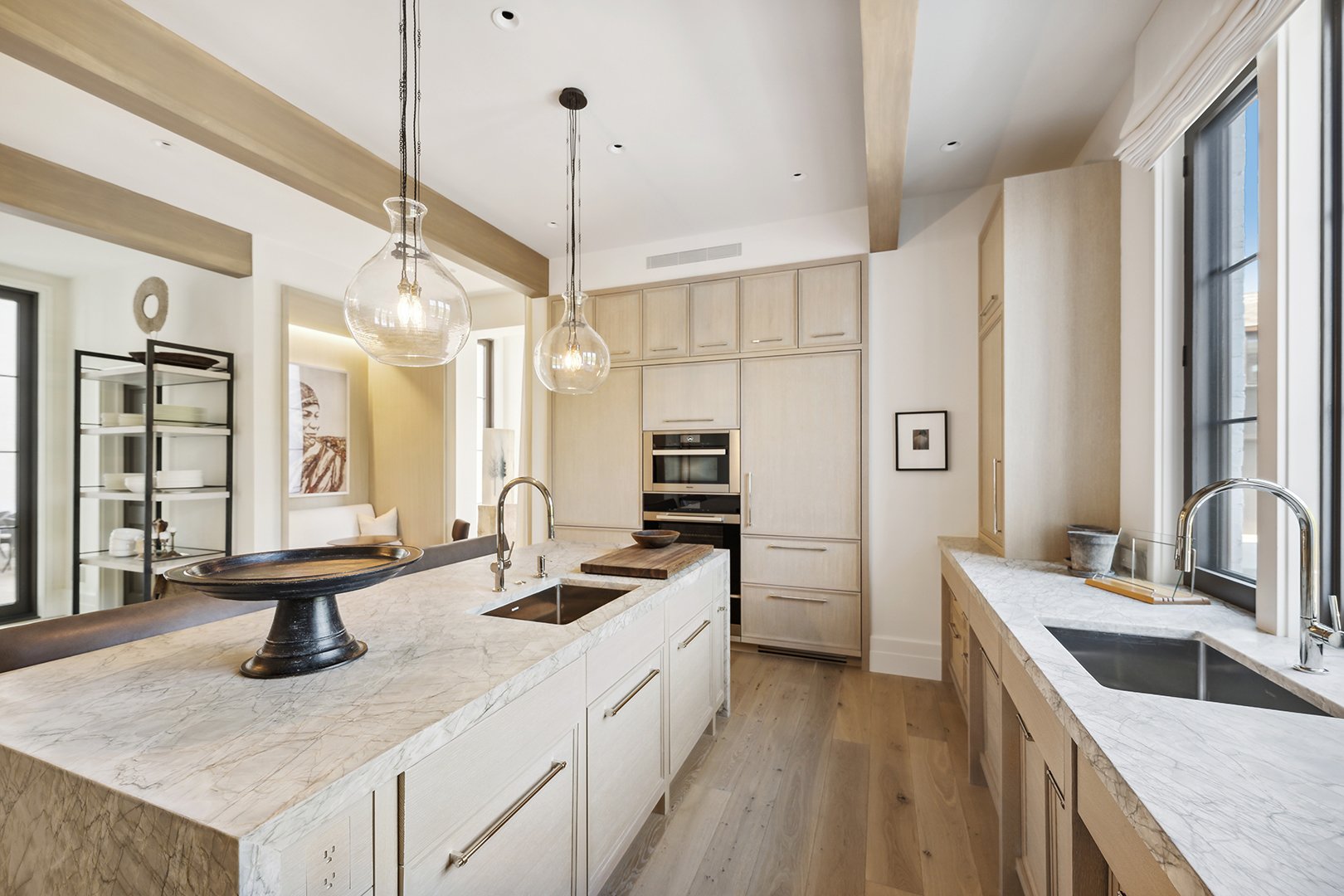
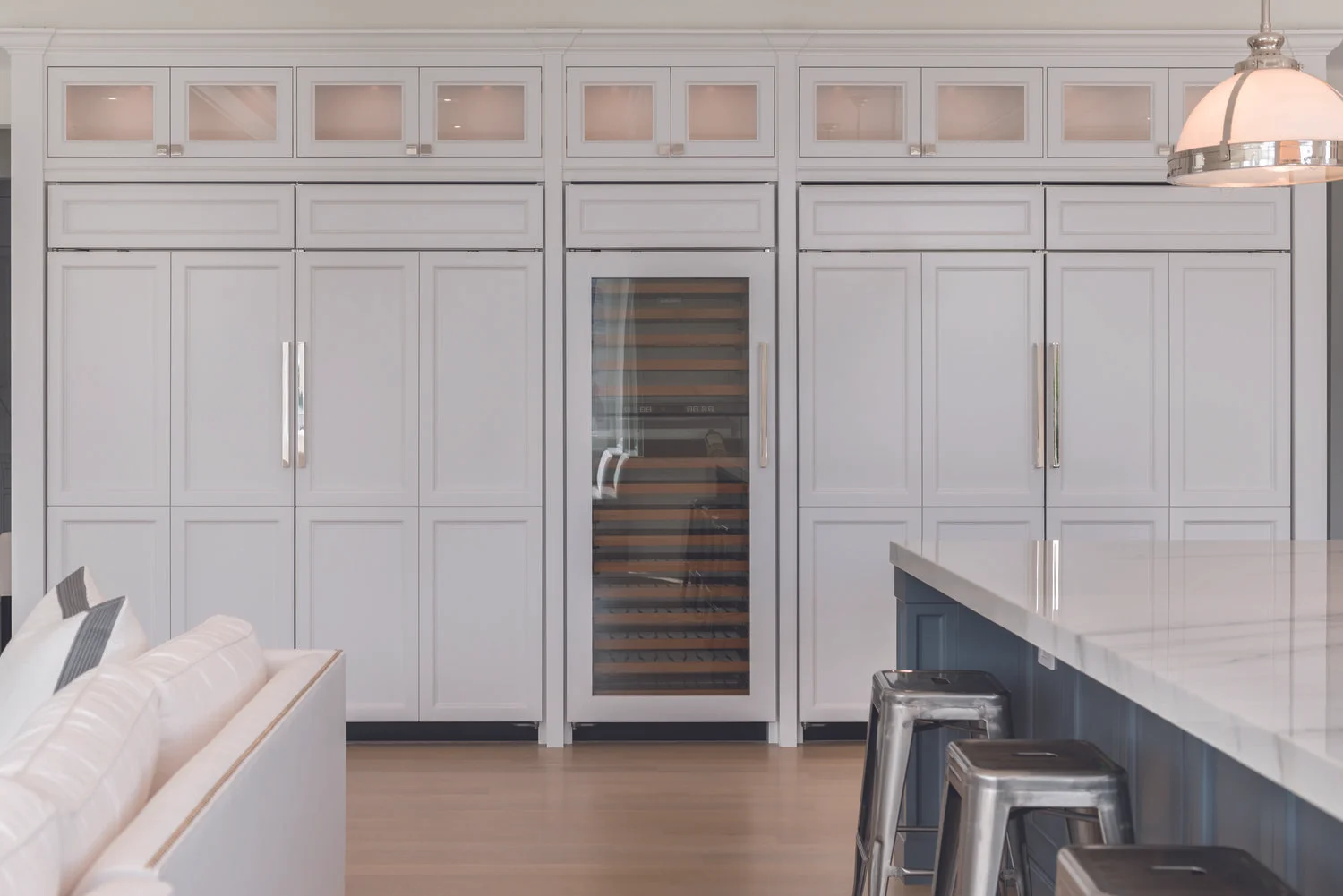
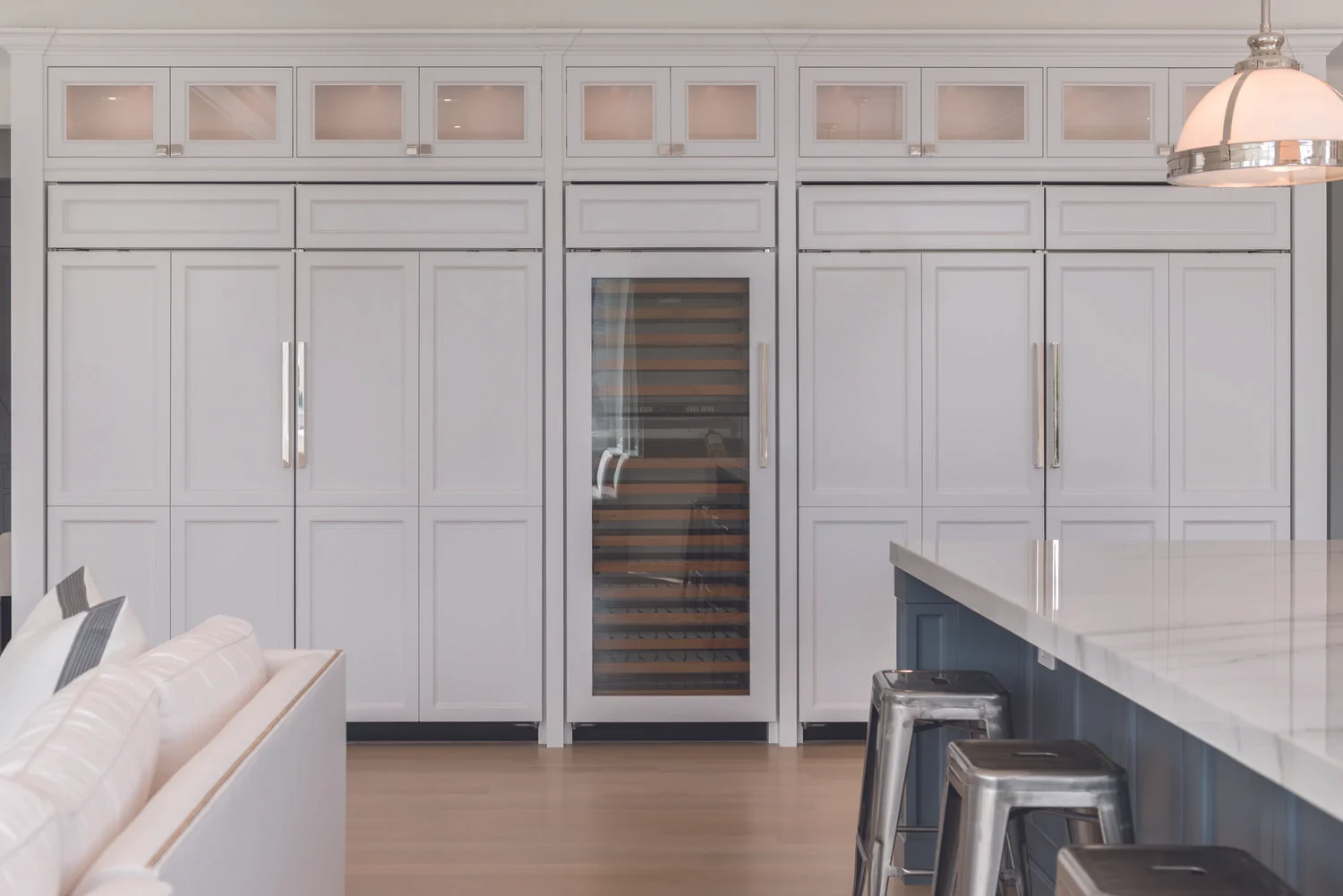
A Southhampton kitchen with panel-ready appliances built and installed by Wood & Co.
How Quality Cabinetry Solves These Issues
High-quality custom cabinetry addresses potential challenges long before installation begins. Experienced cabinet manufacturers are familiar with the above challenges, anticipate them, and work around them.
Key strategies include:
Precision Craftsmanship: Appliances panels and the surrounding cabinetry are crafted with exact dimensions so every reveal and door line is consistent. This preserves the built-in appearance where everything feels aligned and intentional.
Thoughtful Material Selection: Using quality materials such as solid hardwoods and moisture-resistant plywood ensures the cabinetry can withstand heat, steam, and daily use.
Documentation and Collaboration: Experienced cabinet makers often consult appliance specs early in the design process to avoid conflicts with warranty or operational requirements.
Professional Installation: Even the most well-crafted cabinets can fail if not properly installed. Never skip this!
Our Commitment to Elevating Your Kitchen
Panel-ready appliances can truly refine the look and feel of a kitchen, but their success depends heavily on the cabinetry that surrounds them. When the cabinets are built with care—aligned properly, reinforced where needed, and designed with ventilation in mind—the entire system works smoothly and maintains its seamless appearance over time.
Wood & Co approaches cabinetry with this level of thoughtfulness, ensuring that each detail supports both the aesthetic and functional requirements of panel-ready appliances. Their familiarity with brand-specific guidelines and integrated design helps create kitchens that feel cohesive and well-considered.
For homeowners planning a high-end or custom kitchen, working with a team that understands the nuances of panel-ready appliances can make the process more efficient and the final result more consistent. It’s the kind of collaboration that helps the design look intentional, perform properly, and last for years to come.
Common Questions About Panel-Ready Appliances
-
Generally, appliances that don’t generate heat have panel-ready options. These can include refrigerators, freezers, beverage centers, dishwashers, and the like. The exception to the heat rule is the warming drawer.
-
No, not all refrigerators can have a panel applied to it. When choosing appliances, look for those labeled as “panel-ready.” When in doubt, double check with the appliance manufacturer or supplier.
-
Within the same brand and size, the costs of the appliances themselves are similar. However, you need to factor in the added cost of the custom panel, appliance pull, and the more complicated installation.