
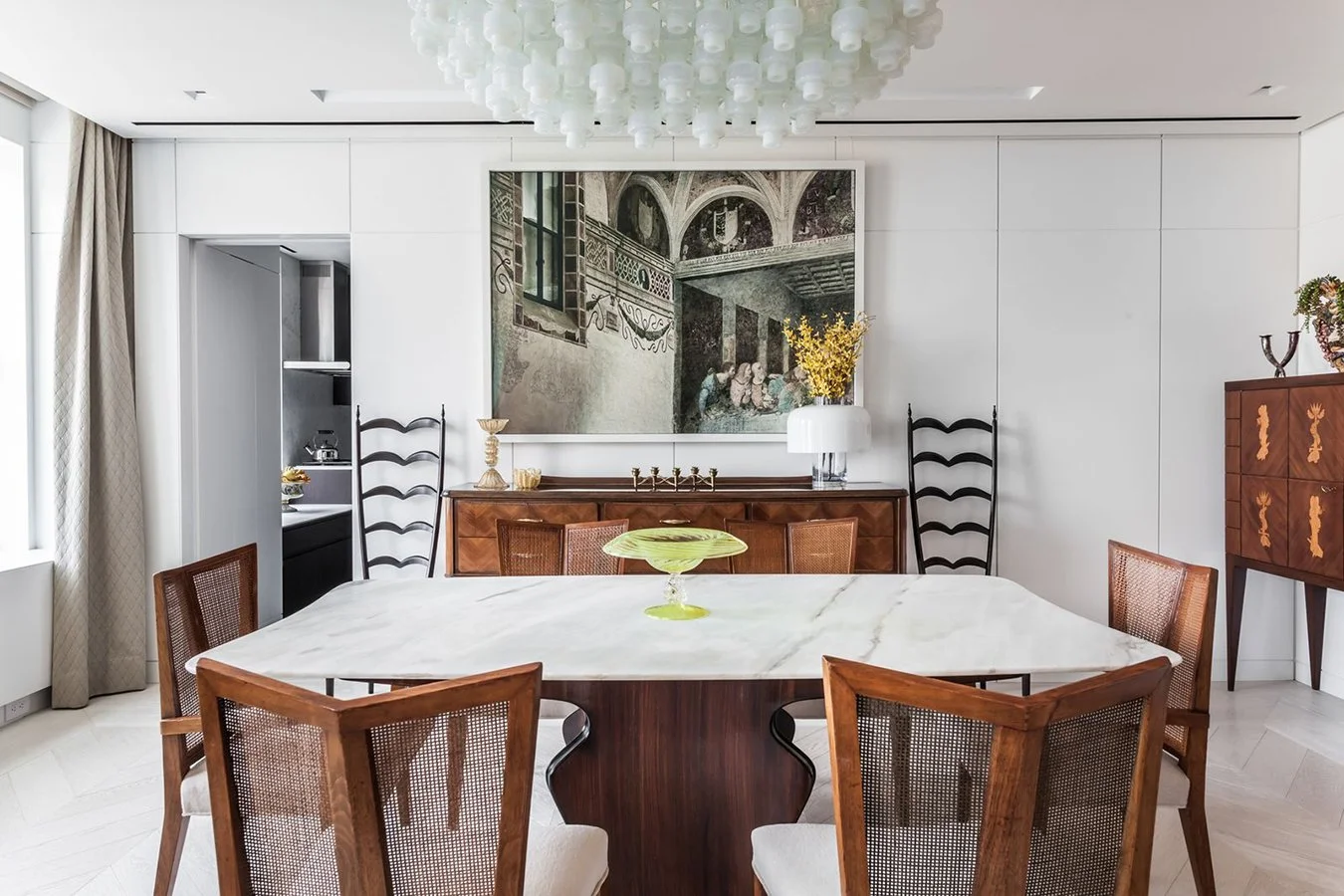
If you’ve ever shopped around for furniture, you’ll notice that they tend to come in a common range of sizes. Even amongst different manufacturers, they all have similarly sized dining tables, office desks, and nightstands. These “standard” sizes have become the default guide or baseline when designing a space. They offer predictability, helping ensure that furniture will generally fit within a space and coordinate with common seating and circulation standards.
But while these dimensions are helpful starting points, they aren’t rules. You don’t have to follow them exactly if they don’t fit your needs. In this article, we’ll explore these standards, when they work, and when they fall short.
Common Standard Table Heights
First, we start by examining the existing standard table heights. While the numbers below present the range of typical offerings, it’s best to think of them as averages. Depending on the style or manufacturer, some can pieces can be found slightly taller or slightly shorter than what’s listed here. Knowing the common sizes lets us visualize how these tables will interact with other furniture pieces and the overall room area.
Dining Table: 28 to 30 inches
Office Desks: 28 to 30 inches
Nightstands and Side Tables: 24 to 30 inches
Coffee Tables: 12 to 18 inches
TV/Media Consoles: 24 to 30 inches
These standard heights are suitable for the vast majority of people and accommodate the most typical room sizes and layouts. They have become widely adopted because they reliably balance comfort, functionality, and visual proportion in a variety of settings. While they provide a solid baseline, thoughtful designers often evaluate each space and user to determine whether adjustments could create an even better fit.
The Case for Non-Standard Table Heights
Standard sizes, again, are baseline. They’re designed to meet the needs of the average person. But I think we can all agree that different people have different needs. Therefore, it’s not a surprise that standard furniture heights just won’t cut it for some. When we want the best possible experience, we want to invest in furniture pieces tailored to our specific wants and needs. Let’s explore some scenarios where you would benefit from custom furniture.
Work Surfaces and User Ergonomics
If you’ve been to an office within the past few years, you’ll notice a steady increase in adjustable desks, allowing employees to sit or stand as they work. This isn’t just so people spend less time sitting, though that’s an outstanding benefit. The main draw of these tables is how they can adapt to each user’s specific ergonomic needs.
Every person is different. Even among those of the same height, their arms, legs, and torso won’t all be the same size. Standard table heights were based on the average person. If your table is too high for you, your arms end up at an awkward angle while typing, leading to wrist pain or shoulder pain. If your table is too short for you, you won’t have enough knee space, and you’ll keep craning your neck down to look at your monitor. An ergonomic table height allows you to work with a proper posture, maximizing your comfort while maintaining productivity
It’s not just office work, where this is important. If you enjoy cooking or baking, you’ll also benefit from having a counter tailored to you. Ideally, your countertop should be 4 to 6 inches below your bent elbow, allowing for a relaxed work posture. For kneading dough, having a lower work surface gives you more leverage. If that’s something you do often, you would benefit from having a dedicated section in your kitchen at lower counter height.
The most comfortable table height isn’t standard, it’s personal.
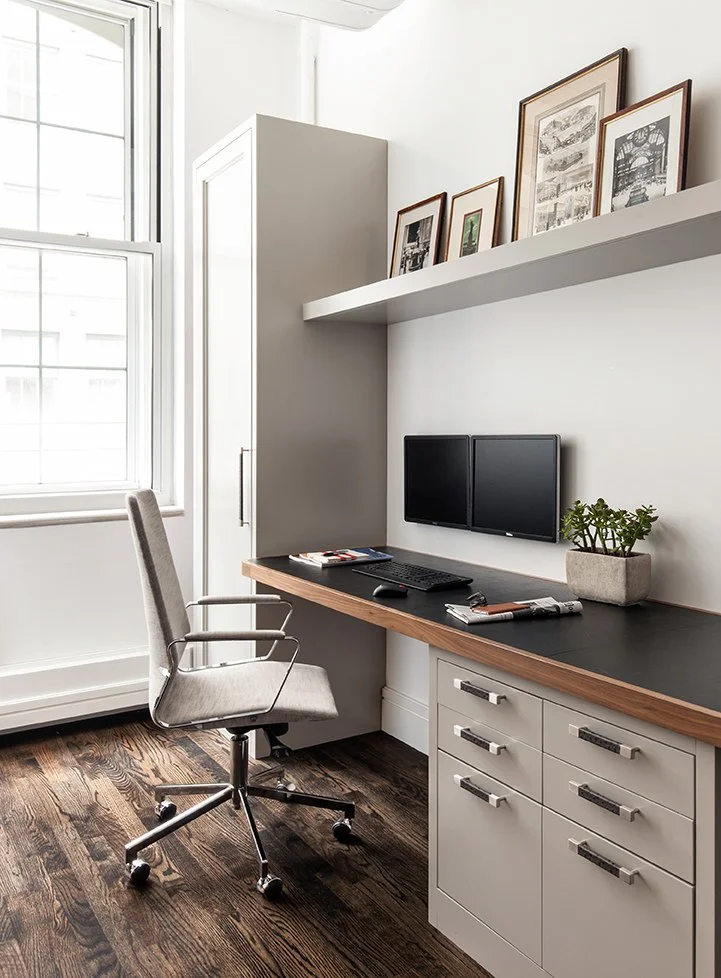
Custom wood home office desk with a leather inlay tabletop by Wood & Co.
Proportion and Visual Balance Between Furniture Pieces
Work surfaces aren’t the only elements that benefit from thoughtful height adjustments. Tables, consoles, and nightstands also play a major role in how a space looks and feels, and their heights can subtly shape the overall visual experience of a room. When proportions are well considered, furniture feels calm, intentional, and grounded. When they’re not, even high-quality pieces can feel slightly off, drawing attention in ways that distract from the larger design.
Visual balance is often about relationships rather than individual dimensions. The relative height between furniture pieces helps establish hierarchy, rhythm, and alignment within a space. These relationships influence how the eye moves through a room and how comfortably different elements sit together. By paying attention to proportion alongside function, designers can create interiors that feel cohesive and considered, even when specific dimensions fall outside conventional standards.
Furniture Relationships to Consider:
Beds and Nightstands
Nightstands are typically designed to sit at the same height as the top of the mattress or up to 2 inches lower. However, with today’s thicker mattresses, pillow-top constructions, or platform beds, standard nightstand heights often end up feeling too low. In these cases, a taller nightstand improves reach, keeps lamps and devices within comfortable access, and restores visual balance at the bedside.Sofas and Coffee Tables
Coffee tables usually work best when they are 1 to 2 inches lower than the sofa seat height. That said, low-profile or deep lounge sofas can make standard coffee tables feel too tall and visually intrusive. A lower, non-standard coffee table often better complements relaxed seating styles, improves sightlines across the room, and reinforces a more cohesive, grounded look.Consoles, Sofas, and TVs
Media consoles are generally lower than surrounding seating to position the TV at a comfortable viewing height. Larger screens can benefit from a lower console, preventing the screen from sitting too high on the wall. In these scenarios, reducing console height helps maintain proper viewing angles and keeps the visual weight of the media wall in check.Dining Tables and Chairs
Dining tables typically sit 10 to 12 inches above the chair seat height, but non-standard chairs can quickly disrupt this relationship. Upholstered dining chairs, chairs with thicker seat cushions, or custom seating may require a slightly taller table to maintain comfort. Adjusting table height ensures proper leg clearance and preserves comfortable posture without compromising the table’s overall proportion.
When Custom Furniture Provides the Best Fit
Recognizing when standard table heights don’t fit a design or user need allows professionals to make informed adjustments or pursue custom solutions, resulting in spaces that are both functional and visually cohesive. While standards work well in many situations, they cannot account for every variable, including lifestyle needs, personal ergonomics, or the subtle proportional relationships that define well-designed interiors. In these cases, custom furniture becomes less about deviation and more about precision.
Tailored dimensions often lead to better outcomes for clients and homeowners. Furniture that is designed around how a space is actually used tends to feel more intuitive, comfortable, and intentional. When height, proportion, and context are considered together, the result is not only a better fit physically, but also a space that feels resolved and thoughtfully crafted.
For designers, builders, or homeowners seeking that level of refinement, working with a skilled woodworker can make all the difference. If you are exploring custom furniture or millwork and want pieces crafted to suit your specific needs and design intent, we invite you to get in touch with us to discuss your project. Wood & Co. would be thrilled to help you craft furniture that gives you the best possible fit.

