• Portfolio
    • Custom Millwork
    • Architectural Renders
  • About
  • FAQ
  • Contact
Menu

Wood & Co.

  • Portfolio
  • Services
    • Custom Millwork
    • Architectural Renders
  • About
  • FAQ
  • Contact
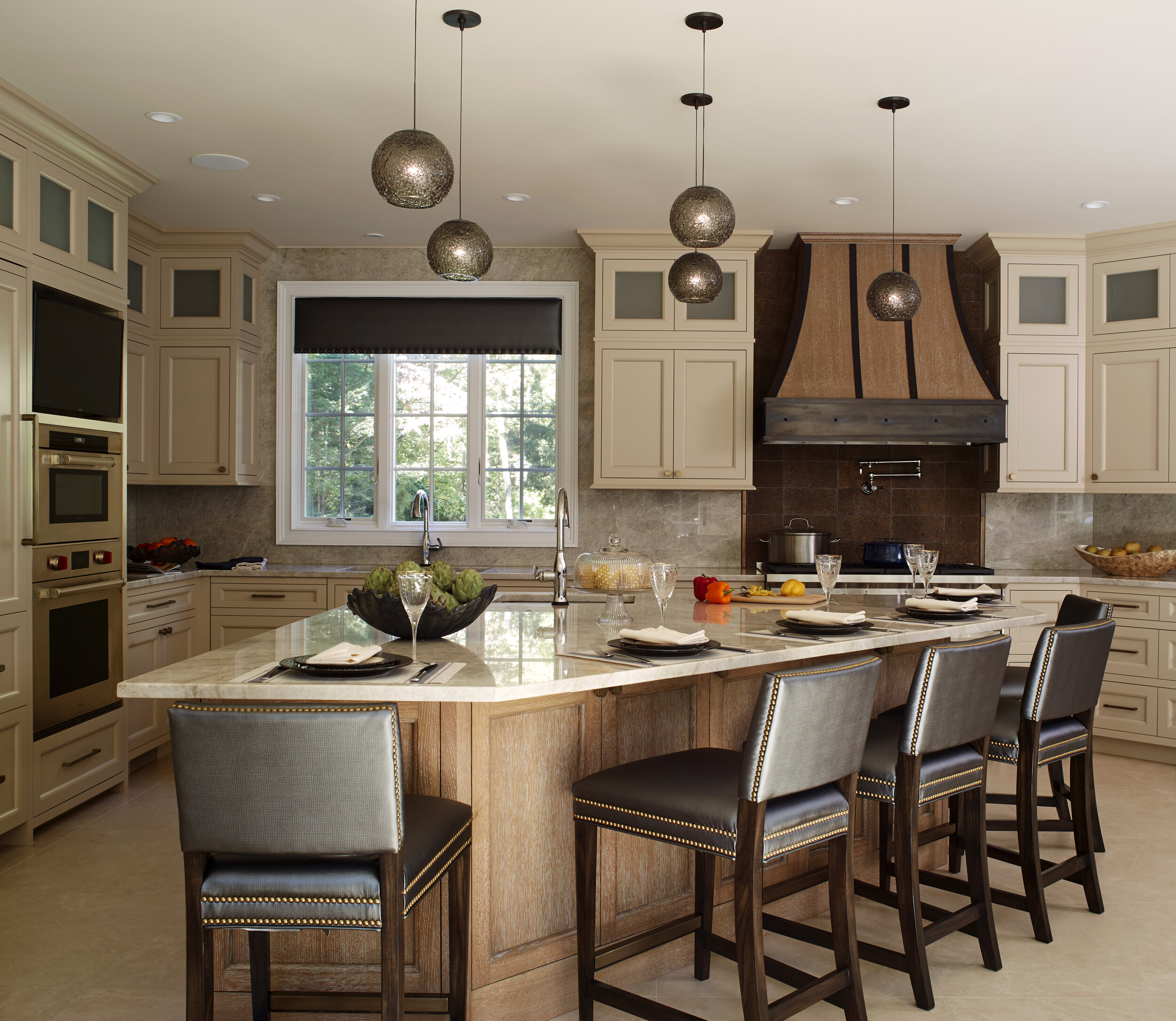
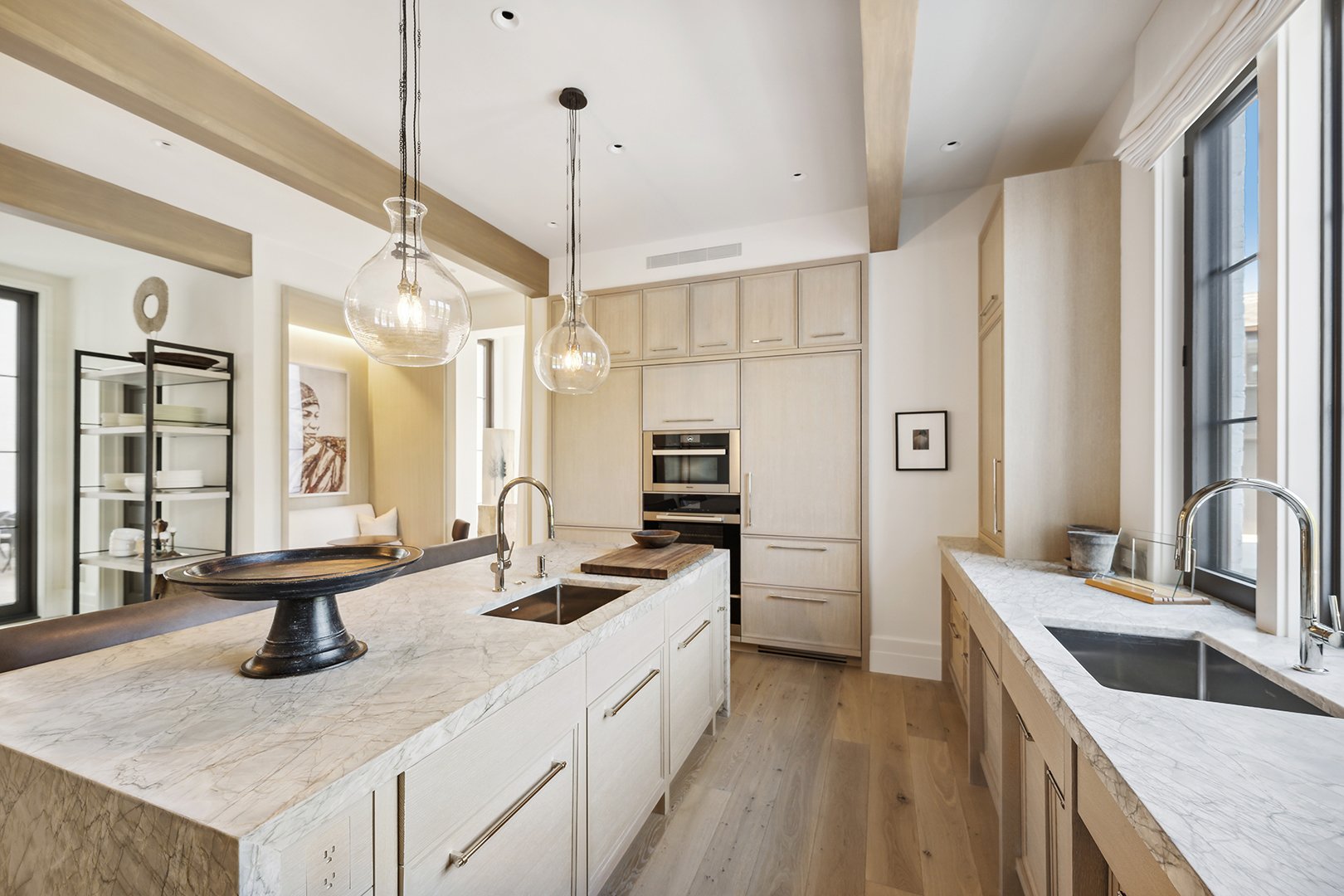
Cerused white oak was used in this kitchen to go with the beige satin lacquer cabinets

Cerused white oak was used in this kitchen to go with the beige satin lacquer cabinets

Cerused Wood: A Renaissance Finish for the Modern Day

June 1, 2023

What Is Cerused Wood?

Cerusing is a wood finishing technique that emphasizes the natural character of grain in wood. This is also called a “limed finish” because of the white liming wax or diluted paint used in modern cerusing techniques. A cerused wood finish mutes the original color of the wood and greatly emphasizes the wood’s natural grain and texture. It’s used in a variety of applications such as furniture, chests, cabinets, cabinetry, and even light fixtures.

But how did cerused wood even begin? It actually began hundreds of years ago! Ceruse is a white lead-based pigment first used in 16th century Europe. It was originally used in cosmetics as a skin whitener. However, this was found to be toxic due to its lead content and was banned from cosmetic use. Craftsmen then later repurposed ceruse for use in wood as a way to preserve it and prevent rot.

Using cerused wood has fallen in and out of favor over the years, but it’s made a comeback. Its muted, yet unique, look lends itself well to more contemporary styles. It can be used on unfinished, stained, or even painted wood. This allows for a wide range of options in designs, and maybe one just perfect for your home.
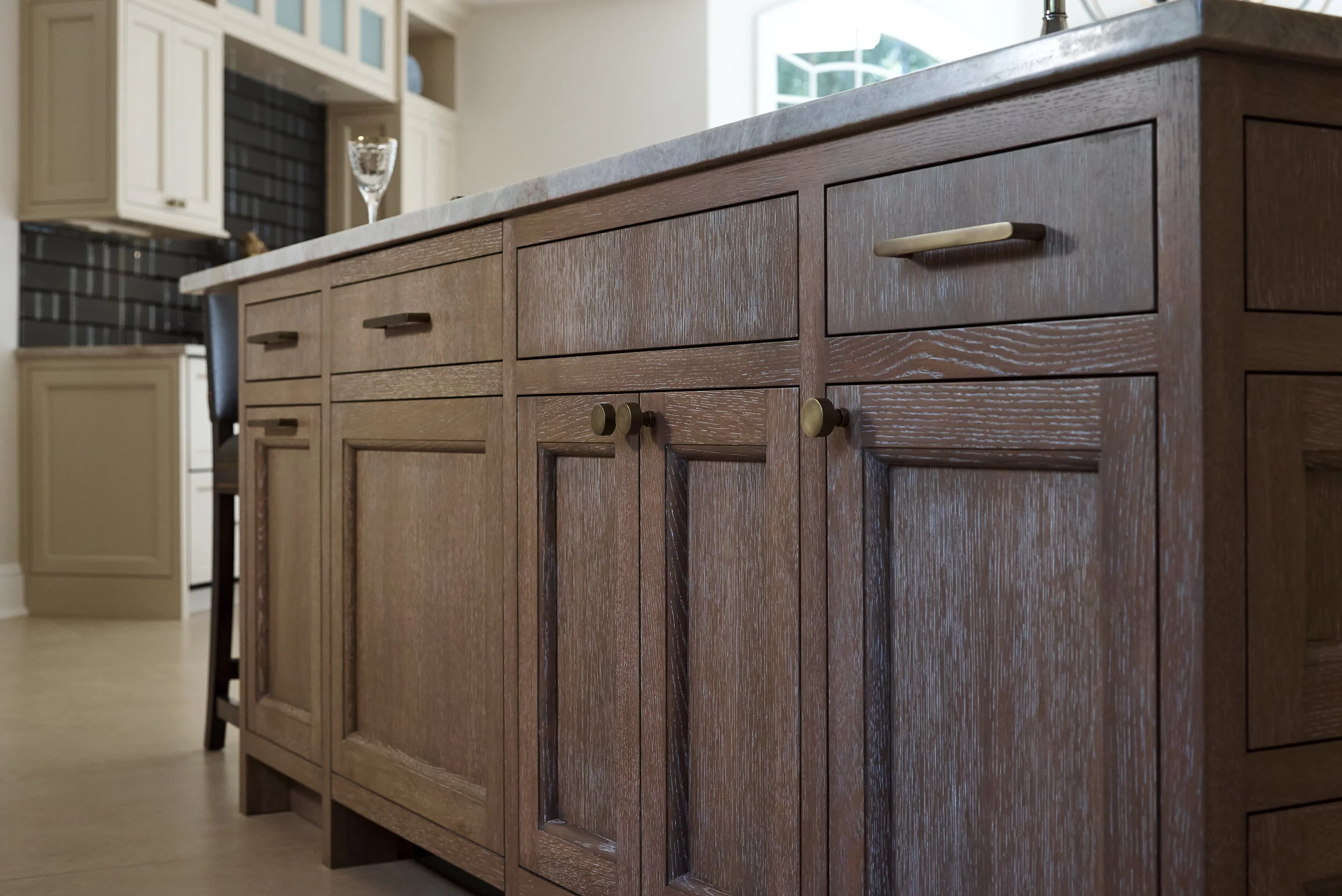
A close look at the wood cerused oak cabinets shows how cerusing emphasizes the natural oak wood grain.
A close look at the wood cerused oak cabinets shows how cerusing emphasizes the natural oak wood grain.

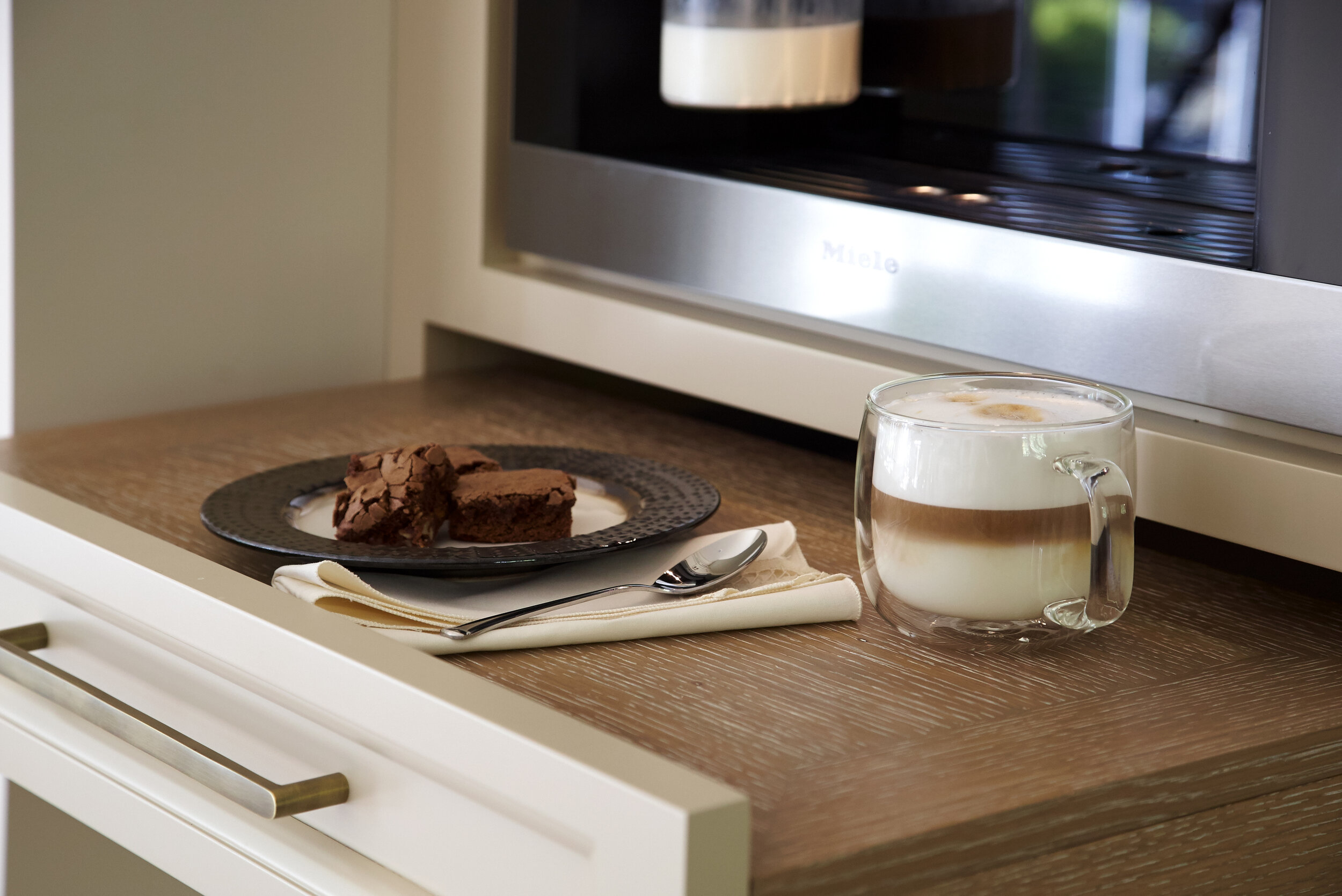
This kitchen pull-out also uses cerused oak cabinetry to complement the color of the painted cabinet faces.

This kitchen pull-out also uses cerused oak cabinetry to complement the color of the painted cabinet faces.

HOW DO YOU CERUSE WOOD?

The question now is, “how is cerusing even done?” It’s certainly a technique that can be done on your own, but it would entail quite a lot of work. There are 4 main steps:

  1. Prepare the Surface. The first step is preparing the wood to be cerused. Any previous paint or stain has to be removed. If it’s unfinished, it will need to be sanded. After that is the main trick of the process –opening the wood grain. This is done by scraping along the direction of the grain with a wire brush. How much and how hard you scrape determines how much the grain will stand out later on. It also affects how distressed the wood will look.

  2. Apply the Base. After this preparation stage, you can apply the paint or stain you want for your wood furniture or cabinet. Note that bare or stained wood would usually result in a more dramatic cerusing effect later on.

  3. Apply the Ceruse. The cerusing material, which is either diluted paint or liming wax, can then be applied. The material is massaged into the open pores of the wood grain.

  4. Wait. After the surface dries, you are more or less done cerusing the wood! Be sure to allow your surface to dry under favorable conditions. This means a relatively low humidity, plenty of air movement, and warm temperatures. Otherwise, you will have to extend the drying and curing time. In general, you can handle the surface after 24-36 hours, however a full cure can take up to 5 days.

WHAT WOOD CAN BE CERUSED?

Oak is the most common wood for cerusing. When searching for cerused wood, often it’s interchanged with cerused oak or limed oak. That’s how often it’s used for this technique! Oak is favored due to its distinct heavy grain and very open pores. It takes the cerusing material well, highlighting its beautiful grain pattern. While almost all wood can be cerused, it’s best applied on ring-porous wood species with visible grain. Examples of these are:

  • Red and White Oak

  • Ash

  • Elm

  • Mahogany

Aside from choosing a porous wood species that can take the colors well, the sawing method also makes a huge difference. Plain-sawn wood exhibits a dramatic “flame-like” pattern. This makes each wood surface look distinct and highlights the wood’s natural character. Rift-sawn wood has a straighter and more uniform grain. This can be preferable if you want a clean and consistent aesthetic.

It’s also important to keep in mind that the specific product you use for cerusing can affect your success. When trying out various cerusing materials or a specific type of wood, it’s recommended to do a test sample first. Try your preferred cerusing technique first on a small piece or inconspicuous area to ensure you get the effect you desire.

WHERE CAN YOU USE CERUSED WOOD?

While cerusing as a finishing technique dates back to hundreds of years ago, it can be quite versatile in modern times. It’s been used in different parts of the home such as bedroom headboards, tables, lamps, flooring, and kitchen cabinetry. Depending on the specific color of the wood base and the cerusing material, cerused wood can work with a variety of design styles.

Black painted cerused oak can create a stunning and bold effect. The high contrast between a black base and white cerusing lime calls attention to itself. This is perfect for something like a coffee table that’s to be the focal point of your living room. It also pairs perfectly with contemporary kitchen styles. Highlighting the grain on black kitchen cabinets helps it look more inviting while still looking clean and sleek.

If you want something more subtle, then a lighter option like cerused white oak will be a better choice. The more natural and earthy look lends itself well to more rustic design styles such as farmhouse and traditional. It also pairs perfectly if you’re after a coastal-vibe, especially with a Hamptons style aesthetic.

How Do You Care For Cerused Wood?

Caring for your cerused wood cabinets or furniture is not too different from the usual stained or painted counterparts. Remember, cerusing was used for preventing rot and preserving wood back in the day. Generally, it’s a durable and hardy finish.

To keep it looking as good as it can be over the years, you should clean it regularly. Dust the surface with a feather duster or soft cloth to help prevent dirt from building up. Take care to avoid using abrasive materials or harsh chemicals so as not to ruin the finish. Be careful of excessive moisture, as well. Use coasters and placemats to prevent moisture rings, and be sure to immediately wipe up any spills.

WHAT’S THE NEXT STEP?

By now, you may have realized that cerusing can be a very involved process. It’s not as straightforward as simply staining or painting your wood, but it definitely leaves an impression. A beautifully crafted cerused oak shelf or tastefully styled cerused kitchen cabinets can elevate and breathe life into your home. By working closely with a designer who knows all about making the most of cerused wood, you can have a piece of history in your home with a modern touch.

If this all sounds like your cup of tea, then adding cerused wood into your home is a great option! Whether you’re looking to update your kitchen cabinets, walk-in closet, or bathroom vanity in cerused white oak, Wood & Co. can help. We specialize in crafting bespoke cabinetry and handcrafted interiors tailored to your needs. Get in touch with us and let’s talk!

Editor Note: This post was originally published in November 2020. It has been updated with additional information and improvements.
More Like This
How Finish Choices Affect the Longevity of Custom Cabinetry
February 3, 2026
How Finish Choices Affect the Longevity of Custom Cabinetry
February 3, 2026

Custom cabinetry is often one of the most enduring investments in a home. Unlike furniture or décor, it is designed to live with you for decades—opening and closing daily, exposed to light, moisture, heat, and constant touch. While style and layout are usually the first considerations, one decision quietly determines how cabinetry will age over time: the finish.

Finish choices are not simply aesthetic. They play a critical role in protecting materials, preserving craftsmanship, and ensuring cabinetry continues to look refined long after installation. At Wood & Co, we often remind clients that the best finishes don’t just look beautiful on day one—they are designed to perform, evolve, and age with intention.

Understanding how different finishes behave over time allows homeowners to make choices that support both longevity and lifestyle.

Read more →
February 3, 2026
Choosing the Right Cabinet Sheen: Matte or Gloss?
October 15, 2025
Choosing the Right Cabinet Sheen: Matte or Gloss?
October 15, 2025

Cabinets are one of the most defining features in a kitchen. They anchor the design, influence how the space feels, and endure daily use. Beyond cabinet style and color, the finish you choose has a significant impact on both appearance and performance.

For homeowners considering painted cabinets, the most common options are matte, satin, and gloss finishes. Each offers distinct qualities that shape the look, feel, and practicality of your kitchen. Matte delivers a soft, understated charm; satin strikes a balanced sheen that’s both elegant and easy to maintain; while gloss offers a sleek, reflective vibrancy. The right choice ultimately depends on your lifestyle, design goals, and how you want your kitchen to function.

Read more →
October 15, 2025
woodnco_southampton_transitional_oak_kitchen_02.jpg
October 1, 2025
How to Mix Different Wood Finishes with Your Wooden Cabinets
October 1, 2025

When it comes to designing a kitchen or living space, wooden cabinets often set the tone. But what happens when your cabinets don’t exactly match your floors, dining table, or other furniture? Do you stick with one finish—or is it okay to mix?

The answer: Mixing different wood finishes with wooden cabinets not only works—it can elevate your entire space. Done right, it makes your home feel layered, balanced, and timeless. Here’s how to confidently combine different wood tones and species to complement your natural-finish cabinetry.

Read more →
October 1, 2025
Popular Types of Wood for Custom Cabinets
December 15, 2023
Popular Types of Wood for Custom Cabinets
December 15, 2023

Cabinets are some of the most ubiquitous parts of our homes. They’re found in our kitchens, bathrooms, living rooms, bedrooms, and many more. They range from small free-standing dressers or fully kitted out custom built-ins. Custom cabinets come in all sorts of materials such as wood, laminates, and even stainless steel. However even as technology advances and styles change, wood remains as a tried-and-true material for most of our custom cabinetry needs.

When it comes to balancing beauty and functionality in cabinetry, nothing comes close to the array of options offered by different species of wood.  When a friend or family member brings up the topic of cabinets, one can’t help but picture the natural allure of wood grain of stained cabinetry or the sleek and crisp finish of painted wood cabinets. Each and every different species of wood comes with their own distinct characteristics.

Today, we’ll dive into the most popular types of wood for custom cabinets. Broadly speaking, they fall into two general categories: wood best for staining and wood best for painting. We will go over the most popular types for each and what they each bring to the table.

Read more →
December 15, 2023
WoodnCo_Natural_Wood_Finish_Kitchen_Cabinets_White-and-Beige.jpg
November 5, 2023
Are Natural Wood Cabinets Right For You?
November 5, 2023

For many years, contemporary interiors have produced sleek white and black interiors. There’s been so much focus on clean lines. But sometimes, this kind of look just feels too clean. Taken to the extreme, it can even feel stoic, sterile, and unwelcoming.


That’s why trends are gradually moving back towards more natural-looking styles. You may have seen the rise of Scandinavian and Japandi inspired homes online and magazines. Mid-century modern has also been having a moment of resurgence of late. And in these styles, the allure of wood is at the forefront.

Today, we’ll cover specifically the lighter side of wood –natural wood finishes. Wood species like white oak, pine, and cedar are but some that fall under this category.

Read more →
November 5, 2023
Satin_Lacquer_Kitchen_Cabinets_Built-by_WoodnCo.jpg
June 23, 2023
All You Need to Know About Lacquer Finish Cabinets
June 23, 2023

Bright vibrant colors and sleek high gloss finishes. These are just some of the things we associate with lacquer finish cabinets, which makes them so highly desirable. Without a doubt, lacquer cabinets bring a touch of elegance and sophistication to any space in your home. They’re great for your kitchens, living rooms, walk-in closets, and any space in between! They also work well with just about any design style you can imagine as lacquer comes in a wide selection of colors and finishes.

As a company that’s worked on many lacquer cabinets over the years, we know first hand how popular this finish is. If you’re looking to elevate your home with new cabinetry, then you’ve come to the right place. Read on and discover all you need to know about lacquer finish cabinetry and whether it is the right choice for you!

Read more →
June 23, 2023
Cerused Wood: A Renaissance Finish for the Modern Day
June 1, 2023
Cerused Wood: A Renaissance Finish for the Modern Day
June 1, 2023

Cerusing is a wood finishing technique that emphasizes the natural character of grain in wood. This is also called a “limed finish” because of the white liming wax or diluted paint used in modern cerusing techniques. A cerused wood finish mutes the original color of the wood and greatly emphasizes the wood’s natural grain and texture. It’s used in a variety of applications such as furniture, chests, cabinets, cabinetry, and even light fixtures.

Read more →
June 1, 2023
WoodnCo_Cerused-White-Oak-Built-ins-Wall-Panels-Living-Space.jpg
September 15, 2022
Elevating Spaces with Cerused Oak Cabinets and Wall Panels
September 15, 2022

Cerusing is a type of wood finishing that traces its origins to Elizabethan era skin-whitening cosmetics. Craftsmen were able to repurpose ceruse, a white lead-based pigment, to preserve wood and prevent rotting. Thankfully, modern ceruse no longer contains any trace of lead. Instead, it now uses white lime wax or diluted paint. Because of this, you may also hear this type of finishing called “limed finish.”

Cerused wood finishes were widely used in the early 1900s for Art Deco furniture and Mid-century modern interiors. In more recent times, this beautiful finishing technique is experiencing a revival, making its way back into American homes.

Read more →
September 15, 2022
Should I Use a Glassos Countertop for My Kitchen?
June 27, 2022
Should I Use a Glassos Countertop for My Kitchen?
June 27, 2022

It’s time to upgrade your kitchen and you’re thinking of what countertop to go for. Granite? Marble? Wood? These are some of the first few materials that people come up with when imagining their new kitchen counters. However, if you’re looking for something unique and different, why not consider a glass countertop –specifically a glassos kitchen countertop.

Read more →
June 27, 2022
5 Benefits of Wooden Interior Wall Paneling
November 17, 2021
5 Benefits of Wooden Interior Wall Paneling
November 17, 2021

Are you thinking about renovating or redecorating a room in your room? Maybe you’re planning to move into a new home and thinking of how you want it to look. In this process, you may have wondered what to do about your walls. Should you just stick to painted walls? Maybe add some wallpaper. Have you considered wooden wall paneling?

From chic café interiors to posh luxury hotel rooms, wooden interior wall panels have become a common sight in today’s spaces. It’s a great way to add aesthetic appeal, create focal points, and improve the overall look of any room. We see often see it in commercial and hospitality settings, but it’s been overlooked by many for residential use. However, that doesn’t have to stay that way. Here we’ll look at some of the reasons you should consider wood panels for your home interiors.

Read more →
November 17, 2021
Tags kitchen, material, 2023
← The Importance of Lighting in Interior DesignUltimate Guide to Designing a Kitchen - Part 3 →

Feeling inspired to start on your project?

Whether it’s specialty interiors, custom kitchen cabinets, bathroom vanities, home entertainment centers or anything in between, Wood & Co. can help. Get in touch with us to get your projects quoted or schedule a consultation. We serve areas such as Connecticut, Tribeca, Long Island, The Hamptons, and other nearby areas in New York City.

We’re just a phone call away!

CALL NOW

Address:
900 South Second St.
Suite 5 Ronkonkoma
NY 11779

Email: info@woodnco.com

Phone: (631) 235-2179


No results found

Portfolio | Custom Millwork | Renders | Blog | About | FAQ | Contact
©2026 Wood & Co., LLC. All Rights Reserved